Editing shapes a manuscript into something readers can trust. It refines clarity, strengthens flow, and removes distractions that weaken the experience. Many authors focus heavily on writing while underestimating how much editing influences the final outcome.
Understanding costs matters early in the process. Without a clear idea of pricing, authors either overspend or skip essential steps. Both choices affect the quality of the book and its reception in the market.
This guide breaks down what editing involves, how pricing works across different stages, and what authors in the United States can realistically expect to invest.
What Is Book Editing
Book editing is the process of reviewing and improving a manuscript before publication. It goes beyond fixing mistakes and looks at how the content reads, how it flows, and how effectively it communicates its purpose.
Editing moves through different stages. Developmental editing focuses on structure and big picture issues. Line editing refines tone and sentence clarity. Copyediting corrects grammar and consistency. Proofreading handles final surface level errors.
Treating editing as an investment changes how authors approach it. Instead of seeing it as an optional cost, it becomes part of building a professional and credible book.
Types of Book Editing and Their Costs
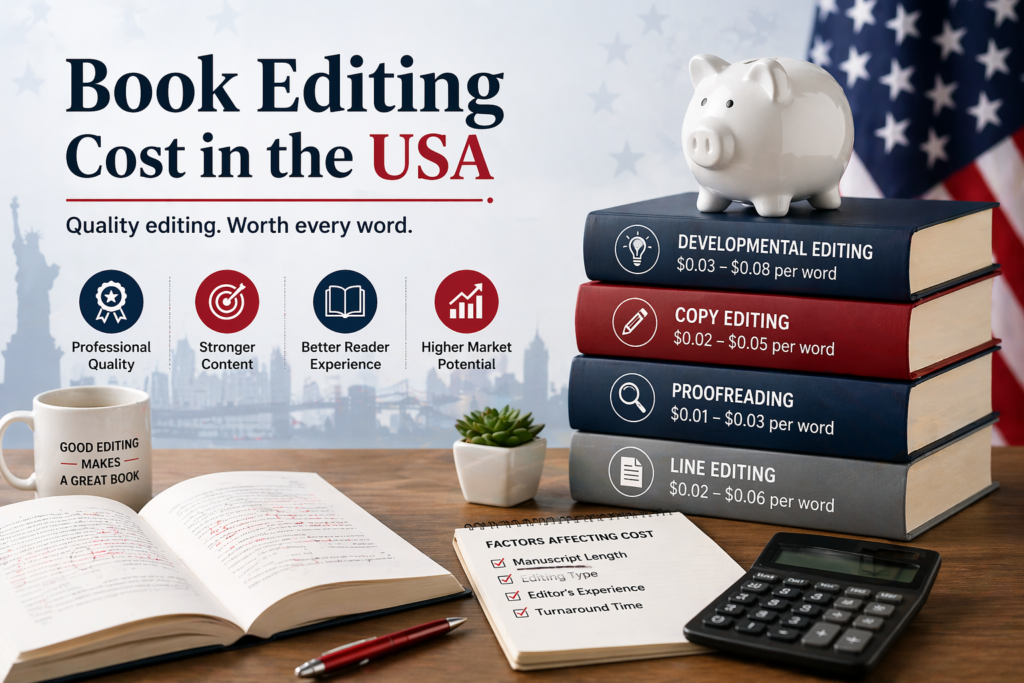
Each editing stage comes with its own pricing range. Developmental editing usually sits at the higher end because it involves deep analysis and restructuring. Costs often range from $0.03 to $0.08 per word depending on complexity.
Line editing tends to fall between $0.02 and $0.05 per word. This stage focuses on refining language and improving readability without changing the overall structure.
Copyediting is slightly lower in cost and often ranges from $0.01 to $0.03 per word. It addresses grammar punctuation and consistency issues.
Proofreading is typically the most affordable stage. Rates often range from $0.005 to $0.015 per word since it focuses on final corrections.
Editors may charge per word per page or per hour. Per word pricing is the most transparent for authors since it directly reflects manuscript length.
Factors That Affect Book Editing Costs
Several factors influence how much an author will pay. Manuscript length plays a direct role since longer books require more time and effort.
Complexity also affects pricing. A technical manuscript or a layered narrative demands more attention than a straightforward text. Genre matters as well since some require deeper stylistic work.
The level of editing required shapes the final cost. A rough draft needing heavy revision will cost more than a polished manuscript.
Experience of the editor also shifts pricing. An established professional or a specialized book editor houston may charge higher rates due to proven expertise and demand.
Turnaround time adds another layer. Faster deadlines often increase costs because editors need to prioritize the project over others.
Average Book Editing Costs in the USA
Industry averages provide a realistic baseline. Per word rates across all stages usually range between $0.01 and $0.08 depending on the type of editing involved.
For a standard book between 50,000 and 80,000 words, total editing costs can range from $1,500 to over $6,000. The final number depends on how many stages are included and how intensive the editing needs to be.
Freelance editors often offer flexible pricing and direct communication. Agencies may charge higher rates but provide structured processes and multiple layers of review. Authors often choose based on budget and comfort level.
Working with book editing services can bring consistency across stages, while hiring a dedicated book editor houston can offer a more personalized experience.
Cost Breakdown by Editing Stage
When combining all stages, costs build progressively. Developmental editing takes the largest share followed by line editing. Copyediting and proofreading complete the process with more focused adjustments.
Planning a budget early helps avoid skipping critical steps. Some authors prioritize line editing and copyediting when resources are limited, though every stage adds value in a different way.
Editing is not just a technical step. It shapes how readers experience the book from the first page to the last. Investing wisely across stages allows the manuscript to reach its full potential without unnecessary compromise.
Ways to Reduce Book Editing Costs
Reducing editing costs starts with how prepared your manuscript is before it reaches an editor. Self editing allows you to fix obvious grammar issues and improve clarity so the editor can focus on deeper refinement instead of basic corrections. This directly lowers the time required and reduces cost.
Another approach is to hire editors for specific stages only. If your manuscript already has a solid structure, you may skip developmental editing and move straight into line editing or copyediting. This selective process helps you stay within budget while still improving quality.
Comparing multiple quotes gives a clearer understanding of pricing across the market. It helps you find affordable book editing services without sacrificing quality. Early feedback from beta readers also plays a strong role. Their input highlights weak areas before professional editing begins which reduces the need for heavy revisions later.
Is Professional Editing Worth the Cost
Professional editing has a direct impact on how a book is experienced. Clean structure and polished language make reading smoother and more engaging. Readers are more likely to stay invested when the writing flows naturally without distractions.
Editing also influences reviews and sales. Books with noticeable errors often receive negative feedback which affects credibility. A well edited book builds trust and encourages positive responses which can improve visibility over time.
The long term value extends beyond one book. Authors who invest in quality editing develop stronger writing habits and create a consistent standard for future work. Working with affordable book editing services can make this investment more accessible without lowering expectations.
Common Mistakes Authors Make About Editing Costs
One common mistake is choosing the cheapest option without evaluating quality. Low pricing often reflects limited experience which can lead to incomplete or ineffective editing.
Skipping editing altogether is another major issue. It may save money upfront but it weakens the final product and reduces the chances of success.
Many authors also misunderstand the type of editing they need. Selecting the wrong stage leads to gaps in the process which affects overall quality. Underestimating the total budget creates additional pressure later when essential stages are still required.
Case Study: Book Editing Cost Breakdown Example
Consider a manuscript of 60,000 words. Developmental editing may cost around $2,000 depending on complexity. Line editing could range near $1,500 while copyediting may fall around $900. Proofreading may add another $400.
The total investment in this case reaches approximately $4,800. After editing, the manuscript becomes clearer more consistent and ready for publication. The improvement in readability allows readers to stay engaged without interruption.
Conclusion
Book editing costs vary based on several factors including length complexity and level of detail required. Understanding these elements helps authors make informed decisions early in the process.
Planning and budgeting create a smoother journey from draft to final manuscript. Investing wisely in editing strengthens both the quality of the book and the long term growth of the author.
FAQs
1. How can I reduce book editing costs without lowering quality
You can lower costs by self editing before hiring a professional and by choosing only the editing stages your manuscript truly needs. Getting early feedback also helps reduce heavy revisions later.
2. Are lower priced editing services reliable
They can be reliable if you review the editor’s experience and past work carefully. Price alone does not define quality, so it is important to check samples and client feedback before making a decision.
3. What is the biggest mistake authors make when budgeting for editing
The biggest mistake is underestimating the full cost. Many authors plan for one stage only and later realize that multiple editing stages are needed for a polished result.
4. Is it okay to skip one stage of editing to save money
It depends on the condition of your manuscript. If your structure is already strong, you may skip developmental editing, but skipping essential stages can weaken the final outcome.
5. Do editing services provide long term value
Yes, professional editing improves your current manuscript and helps you develop stronger writing habits, which benefits future projects as well.